POSES History
The Birth of POSES
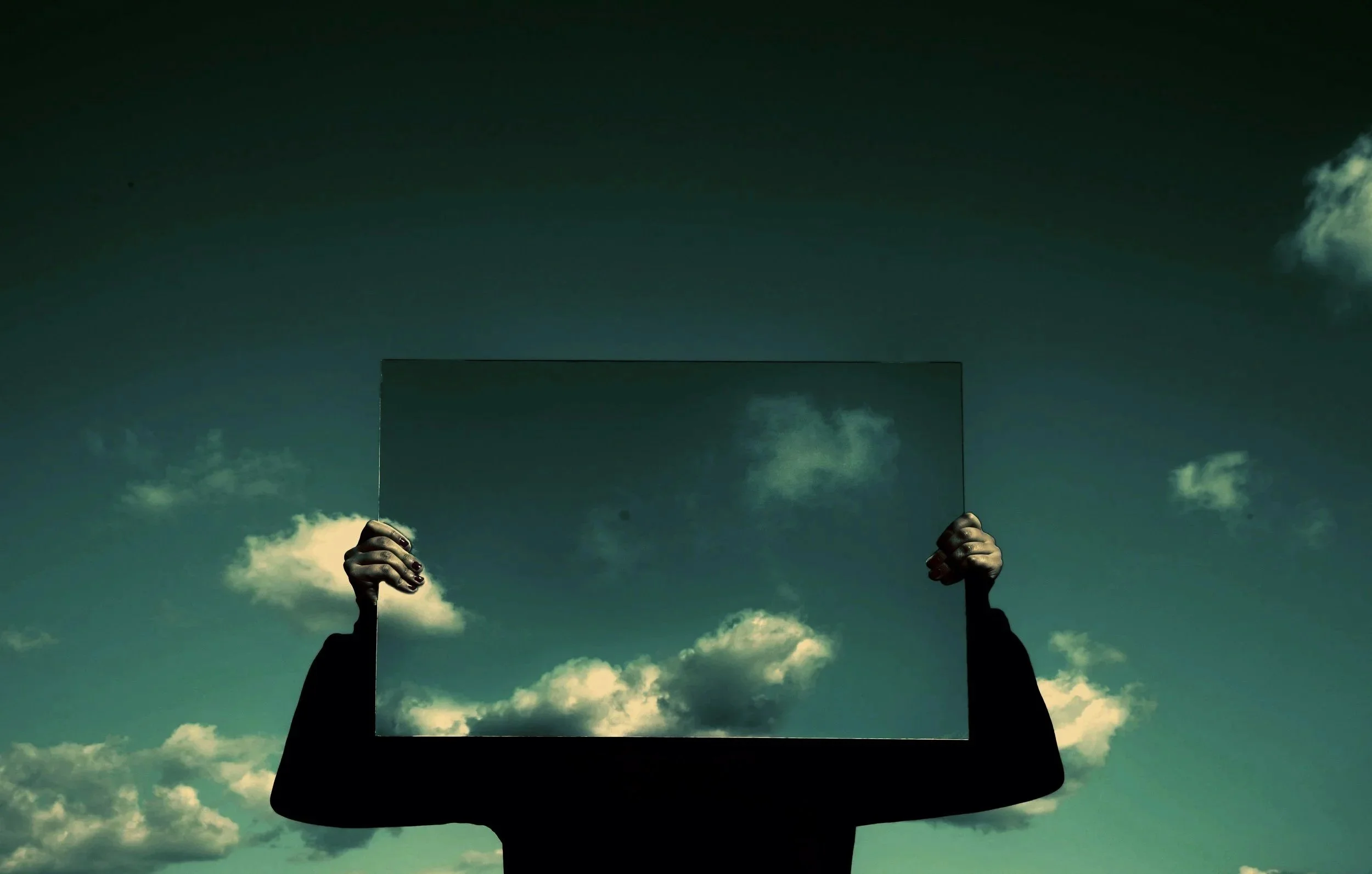
POSES emerged from the intersection of various psychosomatic therapies and a deep curiosity about the relationship between body, mind, and spirit. It is a system of self-study centered on intentional observation practiced in front of a mirror, and designed to help you see yourself clearly and become the conscious and the dynamic being you are.
POSES: Program of Self-Encounters
POSES was created by Renata Abbade, a Brazilian-born artist, researcher, and lifelong explorer of the human experience. Since an early age, Renata has been drawn to the mysteries of the self, studying Do-In (Self-Massage), Astrology, Freud, and Jung before she was even a teenager. At thirteen, she began psychotherapy with a Jungian analyst simply to “meet her subconscious,” and by fifteen, her first experience with Global Posture Reeducation (RPG Method®) — a somatic therapy developed by French physiotherapist Philippe Souchard — changed her forever.
Her curiosity for the ways the body speaks continued to expand through the study and practice of Pilates, the Alexander Technique, Feldenkrais Method®, Body-Mind Centering®, and other somatic disciplines. In 2009, this ongoing inquiry crystallized into what would become POSES, a practice of deep observation and embodied awareness — a way to meet oneself through movement, sensation, and reflection.
Renata’s journey has taken her from Brazil to the U.S., from the bustle of São Paulo and New York to the stillness of Mendocino County, California, where she now lives surrounded by ancient redwoods. Her professional path has been as multifaceted as her inner one, spanning visual communication, art, fashion, healing, and design, and consistently guided by a devotion to aesthetics, consciousness, and “truth”.
Inspired by movement, relationships, and the natural world, Renata continues to evolve POSES as both a personal and collective invitation to look inward, to listen deeply, and to rise through self-awareness.

FAQs
-
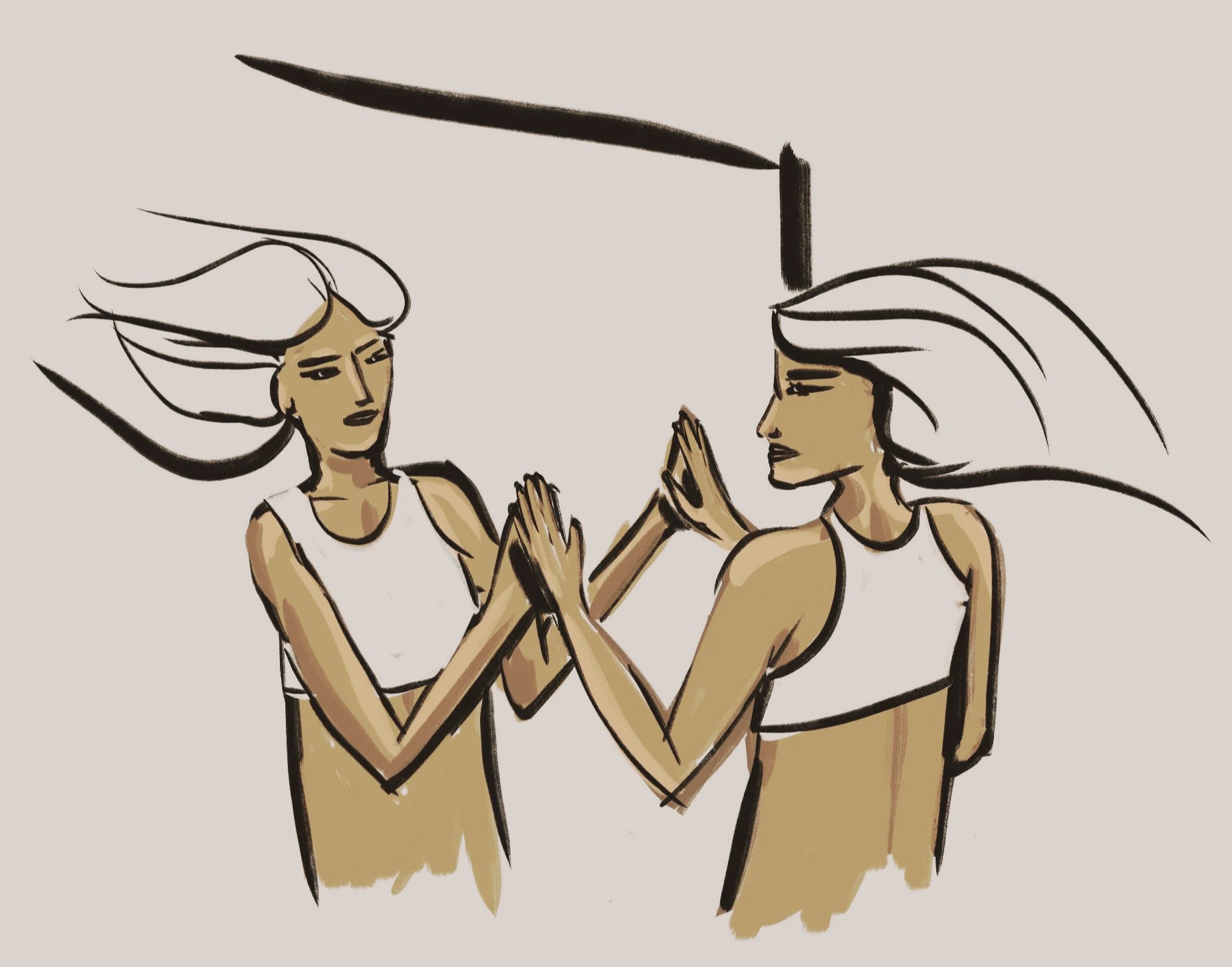
POSES (Program of Self-Encounters) is a method of self-inquiry that invites you to look at yourself in the mirror and awaken and observe all eight senses: visual, auditory, gustatory, olfactory, tactile, intuitive, proprioceptive (your sense of movement, balance, and position in space), and interoceptive (your awareness of internal sensations such as hunger or pain). By setting aside dedicated time and space to observe yourself, you begin to see and understand who you are in the present moment.
-
A guided encounter is a time and space to meet yourself with support and structure. With simple prompts and moments of gentle and adaptable movement and stillness, you are invited to observe, to notice how you feel, think, move and respond. It’s a calm, intentional time to notice what is happening within and around you, from the inside out and the outside in.
-
Program of Self-Encounters can be both therapeutic and meditative, though it is not a replacement for any personal or psycho-spiritual practice. The insights you gain through POSES can enrich what you already do, whether that’s yoga, mindfulness, journaling, psychotherapy, prayer, or other forms of self-exploration.
-
POSES is for anyone seeking clarity and a deeper understanding of themselves. It welcomes all backgrounds, beliefs, and levels of experience. Whether you are navigating a transition, deepening an existing practice, or simply feeling called to know yourself more fully, POSES offers a structure for that exploration. All it requires is your openness to look inward, and a mirror (sometimes!)
-
The rhythm of your practice will depend on your own needs and life circumstances. There are times when self-observation feels essential, and others when it comes more naturally. Over time, it becomes second nature, a sustainable way of staying conscious and intentional as you move through life.
-
Every person’s experience is unique. Some may feel a sense of relief—physical, emotional, or mental—right away, while others notice gradual changes over time. POSES isn’t about fixing or setting goals to be achieved; it’s about returning to center, looking and listening inward, and establishing an ongoing dialogue with yourself. You are not a self-improvement project. There’s no finish line, just a continuous unfolding of awareness.
-
Absolutely! Once you understand the principles and rhythm of the practice, your self-encounters can unfold naturally, without external guidance. The aim is for you to develop a personal relationship with the process, so it becomes a lifelong tool for reflection and self-connection.
-
Yes. Because POSES draws from research in somatic traditions, including influences from RPG, the Alexander Technique, Feldenkrais, and Body-Mind Centering, Sensorimotor Psychotherapy, and more. It works with the whole person. By developing the senses, including proprioceptive and interoceptive awareness, one can notice shifts in emotional clarity, relational capacity, communicational skills, in how they carry themselves, breathe, and inhabit their bodies.
-
Not at all. POSES is not a performance or a fitness program. It’s a practice of awareness—an opportunity to get to know yourself, your patterns, and your presence.
-
While POSES shares qualities with both, it is its own distinct practice. Meditation often invites you to turn away from the outer world; POSES uses the mirror as a conscious tool, making the outer a doorway to the inner. Therapy typically involves a trained guide helping you navigate and process your experiences; POSES places you in the role of your own witness and therapist. It works great alongside both.
-
The mirror in POSES is a tool for visualizing your own presence, not to check on your appearance. It is a neutral surface, awakening the visual sense, for honest self-observation, helping you notice posture, expression, sensation, and the subtle ways your body communicates, in ways you may not be conscious of. The mirror, over time, becomes less a reflection of your look, and more a portal to how you are. You look to find acceptance, not adulation. In fact, once you start uncovering your complexes, limiting beliefs and insecurities, narcissistic traits start to fade.
The 8 Senses
Human perception begins with the senses, and in POSES, we work intentionally with all 8: visual, auditory, olfactory, tactile, gustatory, intuitive, proprioceptive, and interoceptive.
Each sense can stand alone or blend with the others, shaping how we understand ourselves and the world. POSES invites you to explore these senses individually and in connection, creating conscious pathways between them through observation, reflection, and experiential practice.
As you awaken and meet yourself through your senses without judgment, you learn to notice, accept, release, and transform. This inward movement is how we reclaim our power, shift in the direction of our choosing, and return to ourselves renewed, again and again.
The 4 Faculties
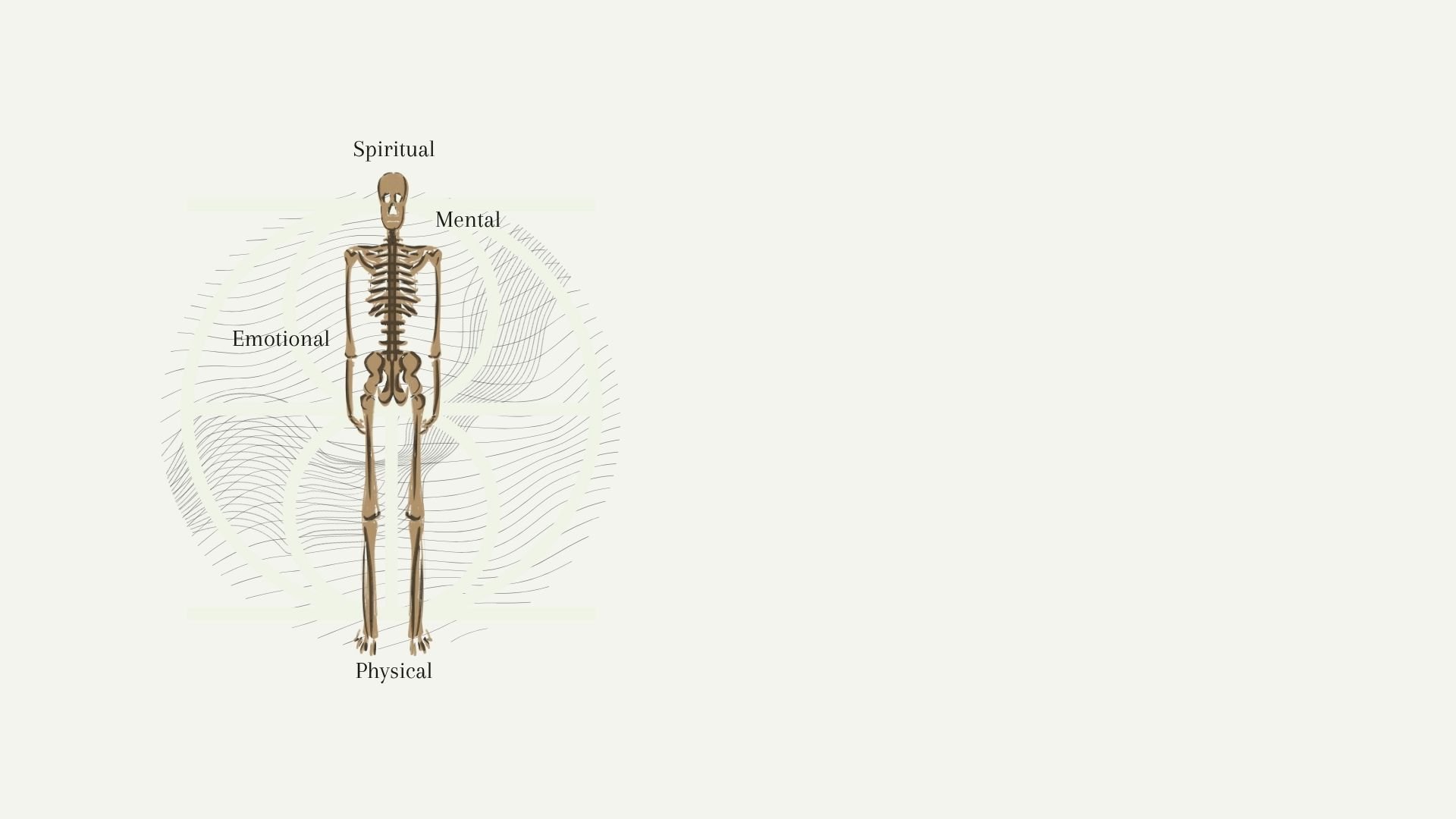
In POSES, we work to align the four human faculties—physical, mental, emotional, and spiritual—by refining the way we perceive. Perception is a psychophysical process: a meeting point between what your senses take in, the predictions your mind generates, and the meanings your inner world assigns. Every moment of perception is shaped by imagination, thought, emotional history, environment, and shifting bodily sensations.
Contact us
Interested in getting to know yourself? Fill out the form, and we will be in touch shortly. We can’t wait to hear from you!